Faculty of Bioengineering (AGRO), nBIO laboratory, Louvain Institute of Biomolecular Science and Technology (LIBST)
Challenges
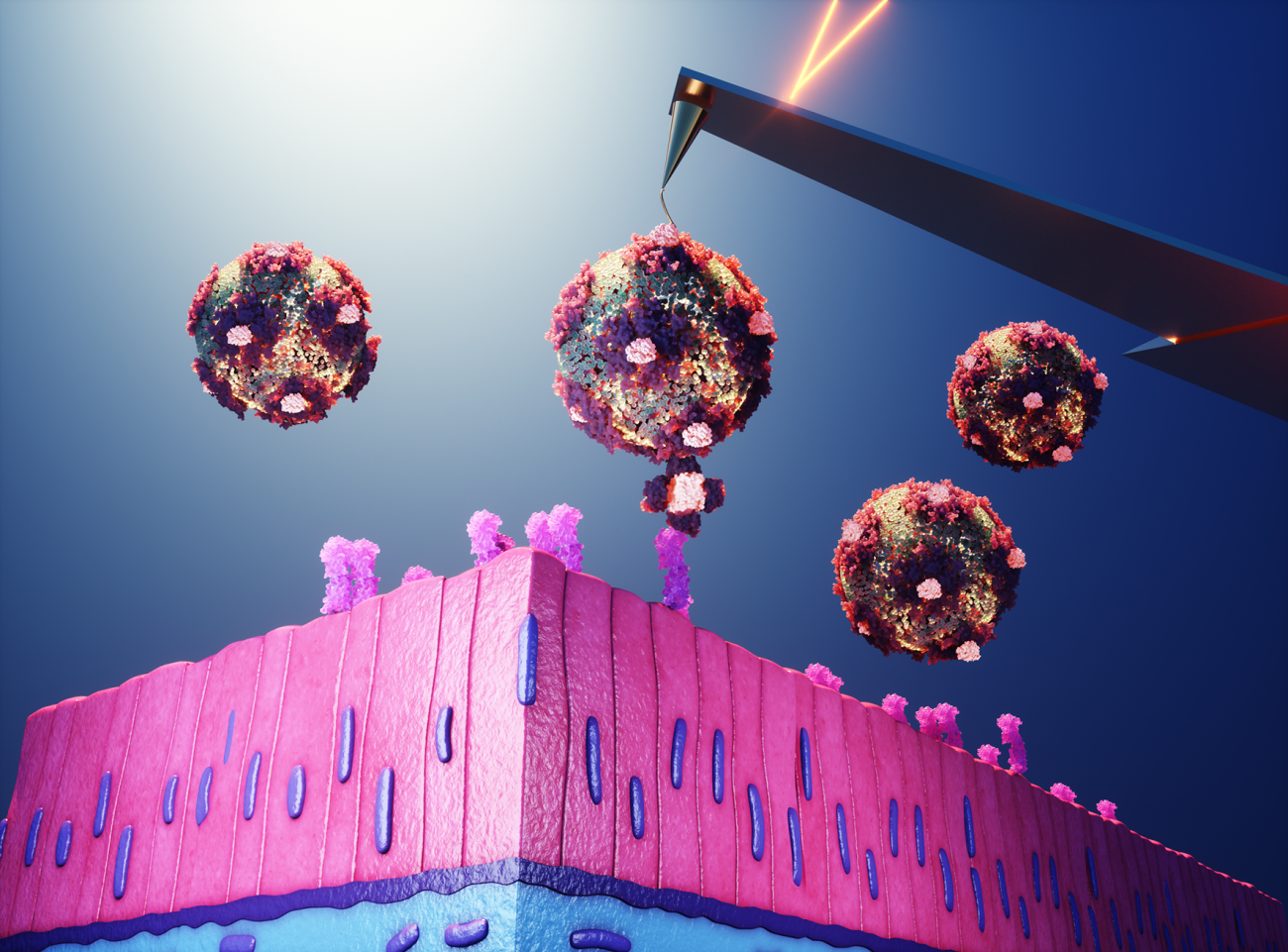
Professor Alsteens’s team is investigating virus-host cell interactions using cutting-edge technology, i.e., atomic force microscopy (AFM). This innovative approach has led to key advances, including:
- Understanding the mechanisms by which viruses attach to their cellular receptors.
- Measuring the forces during virus-cell interactions at nanometre scale.
This research has revealed key stages in the lifecycle of viruses, more specifically the process by which the virus attaches to the host cell receptor, paving the way for new strategies to block infection at an early stage.
The impact of their work was particularly significant during the COVID-19 pandemic. In collaboration with the University of Namur, the team contributed to the development of a molecule capable of preventing infection by inhibiting virus-receptor attachment. This discovery represents a promising advance in the development of new antivirals.
UCLouvain’s contribution
The research conducted by the laboratory has not only increased our understanding of viruses, but has also led to interdisciplinary collaborations for the improvement of biophysical tools to analyse molecular interactions. These advances benefit several fields, including:
- Virology, by helping to identify new therapeutic targets.
- Microbiology, by studying interactions between bacteria and cells.
- Oncology, by exploring the role of cellular interactions in the development of cancers.
Thanks to these contributions, the laboratory is now a leader in the field of molecular biophysics, playing a key role in the fight against infectious diseases.