École polytechnique de Louvain (EPL)
Challenges
Small watercourses have suffered from chronic underinvestment for many years. Although essential for water management, they have often undergone arbitrary modifications that have reduced their ability to fulfil their functions as ecosystems. A dam on a watercourse or a waterfall that is too high can act as a barrier to the free movement of fish and sediments. Altering the course of a watercourse and straightening it destroys the diversity of depth and water velocity needed so animals and plants can thrive. The concreting of watercourses also prevents any groundwater flow and exchange; a combination of the latter two modifications can even exacerbate flooding.
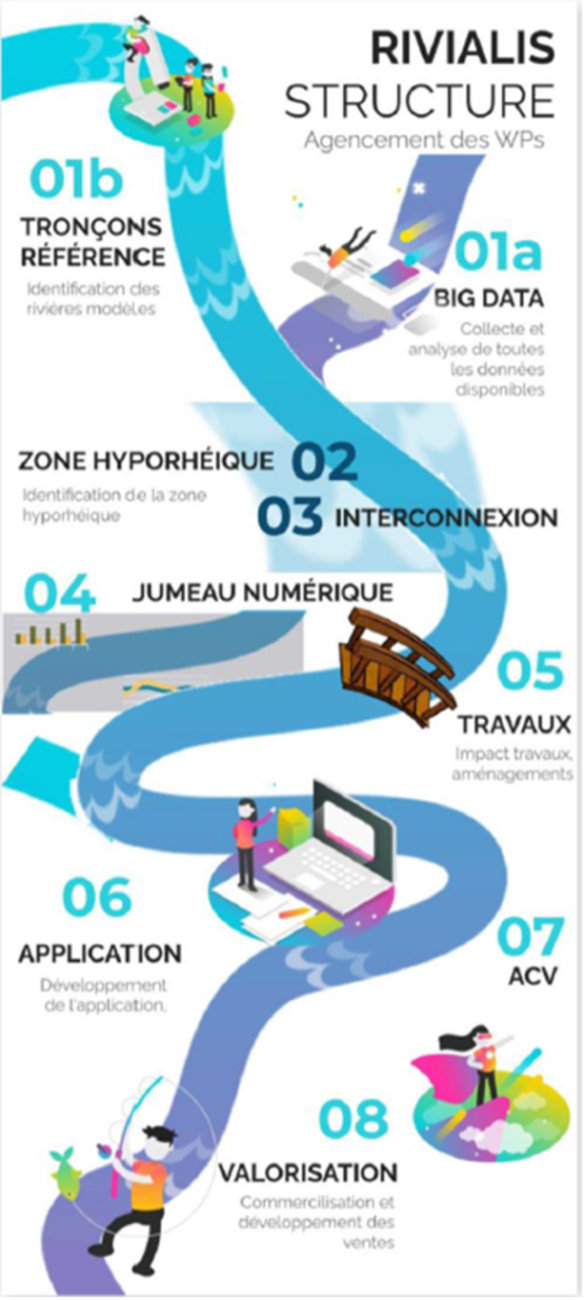
The aim of this project is to develop a tool for studying river renaturation projects that facilitates an objective review of the benefit/investment ratio on the basis of hydraulic, biological and hydromorphological criteria, as well as criteria relating to the hyporheic zone beneath and alongside the stream bed.
UCLouvain’s contribution
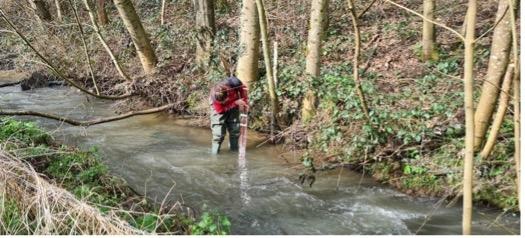
Martin Petitjean is a research assistant at UCLouvain, focusing on a research topic that is central to our future. Optimal river management has several benefits, including reduced risk of flooding, maintenance of minimum stream flow during low water periods, improved water quality (in order to meet increasingly stringent Water Framework Directive requirements), reduced erosion, enhanced biodiversity, etc. Thanks to this research, he also learns about eco-hydraulics and the models derived from it.
In the context of this project, he works with other academic partners (ULiège and Agro-Bio Tech) and various private companies (Stream&River, Kapta Survey, SkalUp).