Faculty of Science/Faculty of Applied Sciences, Center for Space Radiations
Challenges
Numerous energetic charged particles are found in space outside the Earth’s atmosphere. Some of these particles, which are captured and trapped in the Earth's magnetic field, form two donutshaped belts around the Earth known as the Van Allen Belts. These particles pose a significant risk to spacecraft: they can disrupt on-board electronics or permanently damage systems, and also constitute a potential danger to astronauts in space.
UCLouvain’s contribution
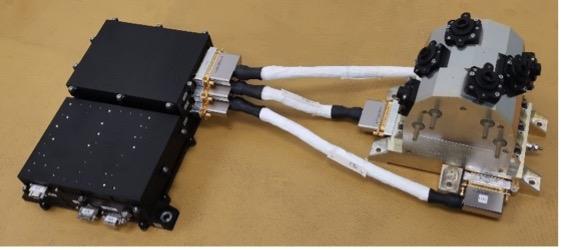
The team of Professor Véronique Dehant (Faculty of Science) and Professor Dimitri Lederer (École polytechnique de Louvain) specialises in the development of cutting-edge instruments for measuring this space radiation. The team relied on this expertise to design a 3DEES (3D Energetic Electron Spectrometer) and is also the Investigative Lead for the 3DEES mission of a satellite called Proba-3, which was launched on 5 December 2024. 3DEES is now in orbit and able to measure electron fluxes in the Van Allen Radiation Belts. As the Investigative Lead, the researchers at UCLouvain play a key role in collecting, calibrating, analysing and interpreting the collected data.