Louvain School of Engineering-Ecole Polytechnique de Louvain (EPL)/Faculty of Motor Sciences
Challenges
On Earth, gravity has a continuous effect on our sensory perception and reflexes. In space, however, the absence of gravity forces the human brain to adapt by modifying the mechanisms that regulate fine motor performance. Astronauts often perform delicate manoeuvres with small objects, which is why it is so important to study the effect of weightlessness on fine motor behaviour and dexterity in an environment that leaves very little margin for error.
UCLouvain’s contribution
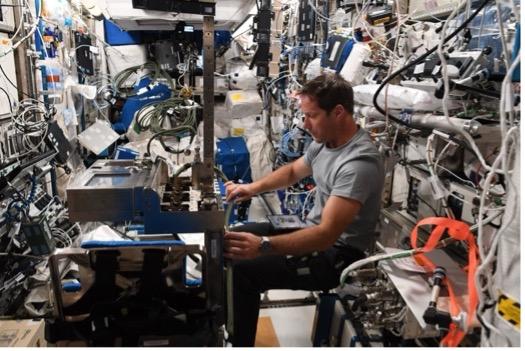
At UCLouvain, Professor Philippe Lefèvre has partnered with Emeritus Professor Jean-Louis Thonnard to develop an instrument and measurement protocol to characterise changes in fine motor behaviour in weightlessness. The instrument was transported to the International Space Station where it was used by a cohort of 11 ESA and NASA astronauts as part of the GRIP experiment. The data collected provided a better understanding of the human body’s sensory and motor adaptation mechanisms in weightlessness.