Faculty of Economic, Social and Political Sciences and Communication (ESPO) & Centre for Development Studies (DVLP)
Challenges
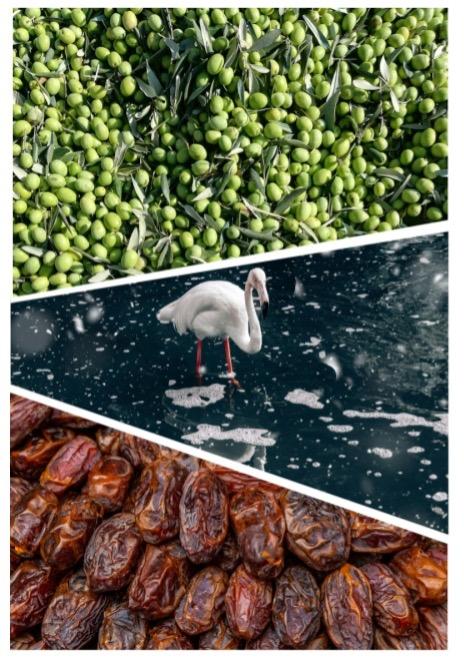
This contribution aims to understand the criticism of and social resistance to free trade between the European Union and Tunisia, more specifically in relation to agricultural products. It focuses on two products: olive oil and dates.
In 2015, negotiations for a Deep and Comprehensive Free Trade Area were launched between the European Union and Tunisia. The increased integration of Tunisia’s economy into the EU single market was met with considerable criticism, especially with regard to agriculture. This has led to a stalling of negotiations between the European Union and Tunisia since 2018. Major risks that were identified include the overexploitation and contamination of water resources, exacerbated by the need for agricultural productivity for export purposes. The most striking examples in Tunisia are date palm cultivation and olive farming and their processing and/or packaging.
UCLouvain’s contribution
On the one hand, the researcher's academic work is a reflection of their personal commitment to provide a response to popular demands for environmental justice, which are part of the current socio-political reality in Tunisia. On the other, this research ties in perfectly with the field of research of the Centre for Development Studies (DVLP) at UCL Louvain. The latter brings together researchers who, while adopting a critical approach to development discourse and practices, seek to shed light on some of the issues that shape the future of our contemporary societies in a globalised world.