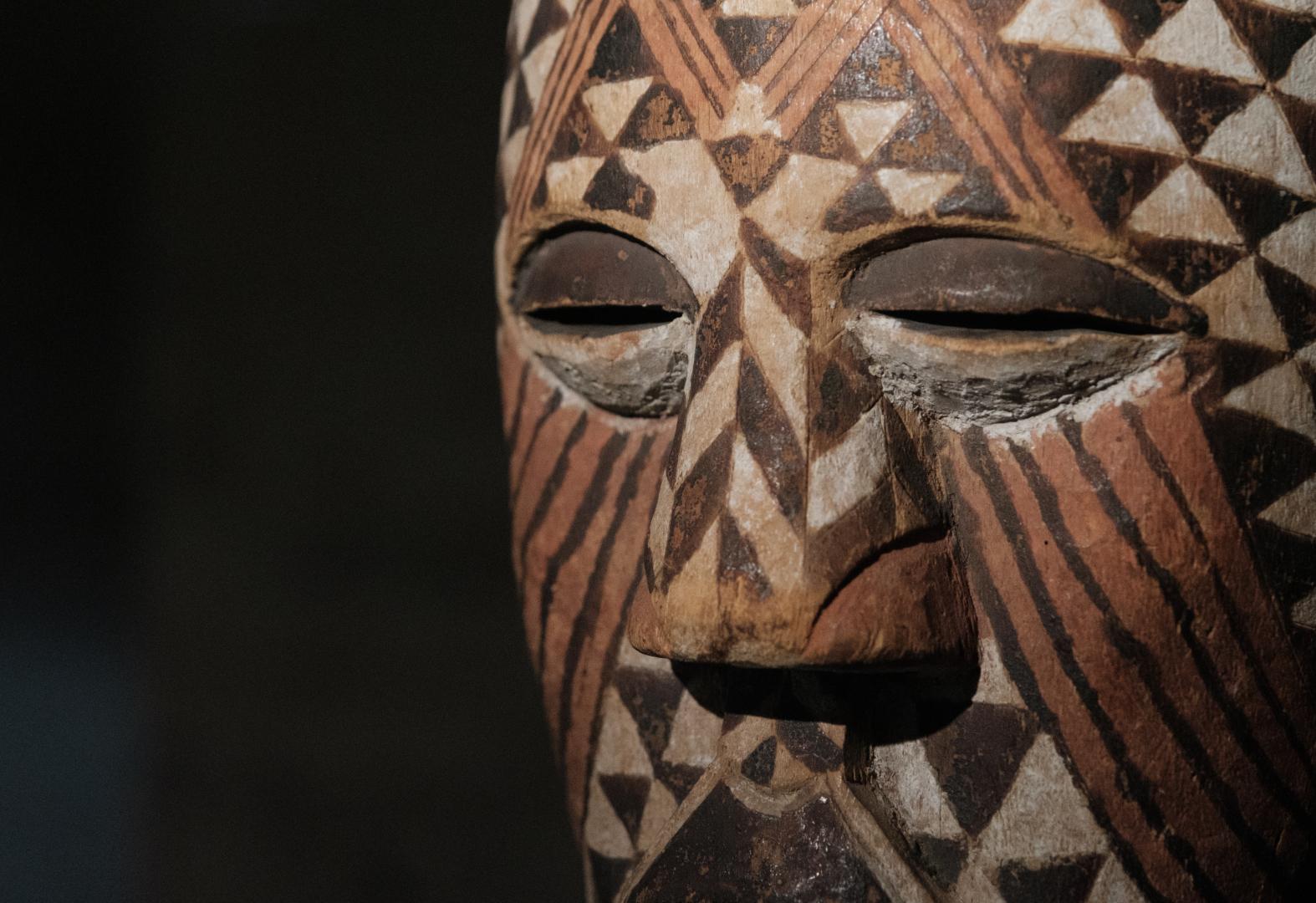
The Musée L is issuing a call for contributions for the first issue of its new scientific journal, ‘Decolonising university collections? Challenges, issues and perspectives’. Researchers, professionals, students, and collectives are invited to reflect on the colonial legacies of universities and the specific nature of their collections. Selected proposals will contribute both to the discussions during the study days and to the publication of the inaugural issue.
The Musée L, UCLouvain's university museum, is launching a new open-access online scientific journal dedicated to university collections and museums: UniMusea – Research and Practices on University Collections. Initially, the journal will be published every two years, focusing on a theme that reflects the museum's research priorities. The aim of this journal is to publish original, unpublished contributions devoted to research on university collections and/or museum practices. In addition, the journal wishes to include and involve people who do not come from a traditional academic background: artists, museum professionals, representatives of institutions, collectives and civil society associations.
The first issue will be edited by Marion Bertin and Marino Ficco, with the support of Professors Charlotte Langohr, Ralph Dekoninck and Marie-Sophie de Clippele. This first issue will be devoted to debates and reflections on the decolonisation of university collections. This proposal is part of a process initiated by the Musée L to study collections originating from a colonial context to rethink museography and museum practices. Indeed, the Musée L holds several objects from former colonies and/or acquired in contexts of occupation or oppression.
This call for papers is linked to two study days organised by the Musée L on 8 and 9 October 2026 in Louvain-la-Neuve (Belgium), entitled ‘Decolonising university collections? Challenges, issues and perspectives’. They will be accessible in hybrid mode: by videoconference and in person. We invite the authors of the selected contributions to speak at these study days. Posters, round tables, artistic performances and other moments of reflection are currently being prepared. The detailed programme will be published in the first half of 2026.
Curent context
In recent years, several books and publications, as well as academic events and initiatives by civil society, have highlighted the importance of addressing the colonial legacies carried by the universities of the former European empires. In Belgium, several universities have set up internal think tanks. This is the case at UCLouvain, which issued a final report on the discussions of the ‘Colonial Past’ working group in 2021. The Université libre de Bruxelles has also taken up this issue, mobilising a mixed discussion group to facilitate meetings and discussions between academic staff and student groups from the Congolese diaspora. The ‘Koloniaal Verleden en Koloniaal Erfgoed’ commission at KU Leuven (September-December 2020) launched the discussion on the Flemish side. All these reports highlight the involvement of Belgian universities in the colonial enterprise. An inter-university working group on the colonial past and the issue of decolonisation in Belgian universities was also commissioned by the Councils of Rectors (VLIR/CRef): a report was submitted in 2021.
In the rest of Europe, several universities or inter-university groups have also examined the history of their collections in relation to the colonial past. At the European level, we can mention the UNIVERSEUM association working group, as well as the Horizon Europe COLUMN project, which aims to examine the colonial legacy of universities in Europe and beyond.
Finally, we should mention the work of the International Committee for University Museums and Collections (UMAC) and the International Committee for Museology (ICOFOM) within the International Council of Museums (ICOM). For example, the UMACJournal devoted a special issue to the issue entitled ‘Beyond Provenance Research: Restitution and Return from University Museums’ (eds. Steph C. Scholten, Andrew Simpson, Gina Hammond); while ICOFOM Study Series published ‘Decolonising academic disciplines and collections’ (eds. Rainer Brömer, Susanne Rodemeier) in 2024.
In formerly colonised countries, universities – often established by colonial powers – house collections with complex histories that need to be better understood and studied. This call is not limited to Europe and its former colonies, but also extends to other regions of the world, as well as to new forms of contemporary colonisation.
Recently, the symposium entitled ‘Provenance Studies of Natural and Human Science Collections: Museology and History for the Present Day’, organised by the National Museum of Natural History in Paris, highlighted the plurality of disciplines concerned with the challenges of decolonisation. We invite a general reflection by giving university collections a broad meaning and questioning all disciplines. In the interests of multidisciplinarity, consideration should also be given to cases of ‘mixed collections’ (Bondaz, Dias and Jarassé, 2016, ‘Collectionner par-delà nature et culture’ [Collecting beyond nature and culture], Gradhiva, 23), which span several disciplines, even though they may have been divided up due to the history of knowledge.
This call for papers is divided into two thematic areas, within which article proposals may be integrated.g group on the colonial past and the issue of decolonisation in Belgian universities was also commissioned by the Councils of Rectors (VLIR/CRef): a report was submitted in 2021.
In the rest of Europe, several universities or inter-university groups have also examined the history of their collections in relation to the colonial past. At the European level, we can mention the UNIVERSEUM association working group, as well as the Horizon Europe COLUMN project, which aims to examine the colonial legacy of universities in Europe and beyond.
Finally, we should mention the work of the International Committee for University Museums and Collections (UMAC) and the International Committee for Museology (ICOFOM) within the International Council of Museums (ICOM). For example, the UMACJournal devoted a special issue to the issue entitled ‘Beyond Provenance Research: Restitution and Return from University Museums’ (eds. Steph C. Scholten, Andrew Simpson, Gina Hammond); while ICOFOM Study Series published ‘Decolonising academic disciplines and collections’ (eds. Rainer Brömer, Susanne Rodemeier) in 2024.
In formerly colonised countries, universities – often established by colonial powers – house collections with complex histories that need to be better understood and studied. This call is not limited to Europe and its former colonies, but also extends to other regions of the world, as well as to new forms of contemporary colonisation.
Recently, the symposium entitled ‘Provenance Studies of Natural and Human Science Collections: Museology and History for the Present Day’, organised by the National Museum of Natural History in Paris, highlighted the plurality of disciplines concerned with the challenges of decolonisation. We invite a general reflection by giving university collections a broad meaning and questioning all disciplines. In the interests of multidisciplinarity, consideration should also be given to cases of ‘mixed collections’ (Bondaz, Dias and Jarassé, 2016, ‘Collectionner par-delà nature et culture’ [Collecting beyond nature and culture], Gradhiva, 23), which span several disciplines, even though they may have been divided up due to the history of knowledge.
This call for papers is divided into two thematic areas, within which article proposals may be integrated.
What does it mean to decolonise university collections?
The need to take a critical look at the history of collections linked to colonisation is common to museums and other institutions that preserve cultural heritage. Here, we wish to examine the specific nature of university collections. More than any others, these collections are linked to the definition and transmission of knowledge. They are material evidence of the colonial past and its legacy in the present.
Is it possible and/or relevant to decolonise museums or university collections? How can such a process be initiated? How can we educate ourselves, rethink management, conservation and documentation, and strengthen ties with the communities concerned? What policies should be pursued in terms of acquisition and disposal? What is the status of university collections originating in a colonial context?
Historicising and re-examining collections involves, in particular, provenance research, which has become an essential task for institutions preserving collections over the last decade. In the process of rethinking collections originating in a colonial context, what role(s) does provenance research play? What are the origins and methods of acquisition of university collections in particular? What research methods should be implemented for these collections? Why is such research being conducted and to what ends? How can we communicate about the process and the results? How can we involve and engage the entire university community?
What is the relationship between universities and their colonial heritage?
University collections and museums are only part of the colonial heritage carried by universities. How can they be a starting point for questioning other forms of colonial heritage, both tangible and intangible, within institutions? How are university collections from a colonial context used (courses, research projects)? Who uses them? What are the relationships with the communities of origin?
How are universities that are committed to decolonising their curricula, structures and operations putting actions in place?
What is the state of university collections in the former colonies? How are they viewed today?
How can we build more balanced collaborations with representatives of civil society and with colleagues from universities in the communities of origin?
Practical information for contributing
We invite submissions of original, unpublished proposals from academic researchers, students, professionals working with university collections, and associations and collectives that have already participated in discussions on university collections in Belgium and elsewhere in the world.
Abstracts (1,500 characters, including spaces, preferably in English) should be sent before 25 January 2026 together with a a short presentation of the contributor to the following address: unimusea-museel@uclouvain.be.
It is also possible to submit proposals for book reviews related to the theme of the call.
At the end of the selection process, ten proposals will be chosen for publication in the form of a long article. A larger number of proposals will be invited to participate in the conference in the form of a poster. We are currently seeking funding to facilitate the
participation of speakers who would have difficulty covering their travel expenses. More information will follow as opportunities arise.
Authors of accepted articles will be notified by early February 2026 at the latest. Articles (maximum 25,000 characters, including spaces) must be submitted by 30 April 2026 for double peer review with a view to publication in the journal at the end of 2026. Contributions may be in French, Dutch, English or German. This choice is based on both the linguistic context in Belgium and the editorial committee's proficiency in these languages. However, authors who wish to submit a contribution in another language may contact us so that we can assess the possibility of publication on a case-by-case basis.